Careful: it's not like addition
When adding, you line up the decimal points. When multiplying, you don't: you line the numbers up on the right, like whole numbers. This often causes confusion. The decimal point is dealt with only at the end.
Example 1: a decimal times a whole number (2.4 × 3)
- Without the point: 24 × 3 = 72.
- Count: 2.4 has 1 decimal place; 3 has none. Total: 1.
- Place the point one place from the right: 7.2.
Common-sense check: 2.4 × 3 is a bit more than 2 × 3 = 6, and less than 2.5 × 3 = 7.5. The answer 7.2 makes sense.
Example 2: two decimals (3.6 × 2.5)
- Without the points: 36 × 25 = 900.
- Count: 1 decimal place in 3.6 and 1 in 2.5: 2 in total.
- Place the point: 9.00, which is just 9.
Check: 3.6 × 2.5 is about 4 × 2.5 = 10. The answer 9 makes sense.
Why does it work?
Take 2.4 × 3. The number 2.4 is 24 tenths. Multiplying 24 tenths by 3 gives 72 tenths, which is 7.2. The decimal point "keeps track" of the tenths.
And for 3.6 × 2.5: tenths multiplied by tenths give hundredths (a tenth of a tenth is a hundredth). That's why there are 2 decimal places. This explanation mainly interests curious children, but it also shows that the rule isn't magic.
Multiplying by 10, 100 or 1,000
A very common special case: there's no need for a written method: the digits just move to the left. See multiplying by 10, 100 and 1,000.
How to explain it to your child
- Start with prices: 3 notebooks at £2.40 cost 3 × 2.40 = £7.20.
- Always estimate before calculating: it's the best safeguard against a misplaced decimal point.
- Get them to circle the decimal places in both numbers and write the total above.
- Remind them that the written method doesn't change (see how to do long multiplication).
The most common mistakes
- Lining up the decimal points as in addition.
- Counting decimal places in only one number: 3.6 × 2.5 = 90 (wrong).
- Not adding zeros: 0.3 × 0.2 = 0.6 (wrong: it's 0.06).
- Thinking multiplying always makes things bigger: multiplying by 0.5 means taking half. 8 × 0.5 = 4.
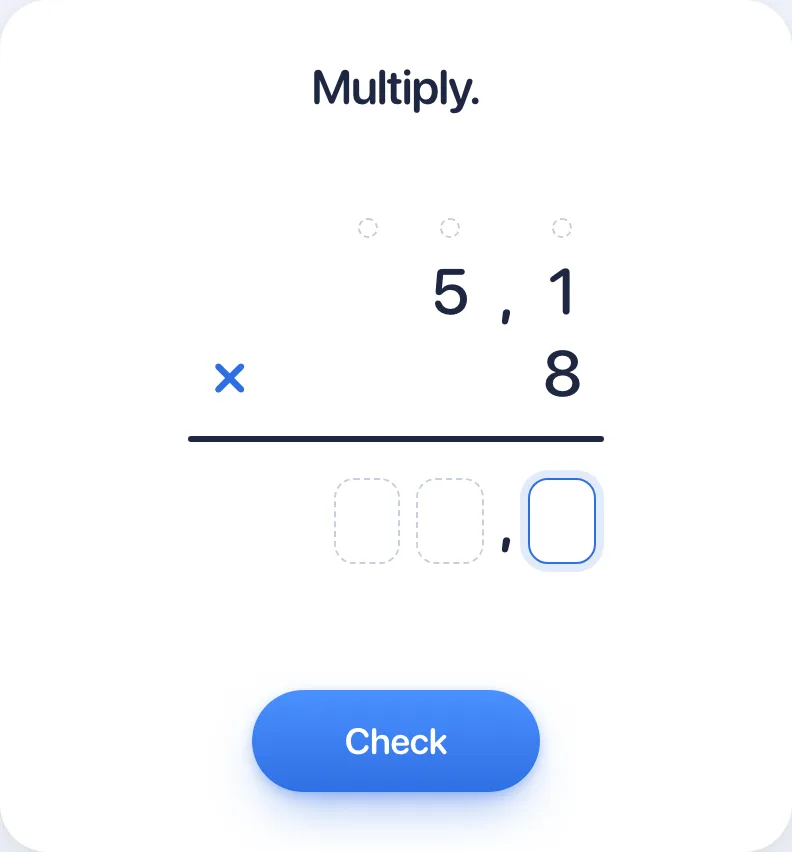
Worked examples
1.5 × 4
3.25 × 3
1.2 × 1.3
0.4 × 0.5
12 × 0.25
Frequently asked questions
Where does the decimal point go when multiplying decimals?
Count the total number of decimal places in the two numbers you're multiplying. The answer must have the same number of decimal places. For 3.6 × 2.5 (two in total), 36 × 25 = 900 gives 9.00.
Do you line up the decimal points when multiplying?
No. Unlike addition, you set out the multiplication with the numbers lined up on the right, like whole numbers. The decimal point is placed only at the end.
When do children learn to multiply decimals?
In England, children multiply numbers with up to two decimal places by whole numbers in Year 6. Multiplying two decimals together is developed in secondary school.
Keep reading: our lesson Calculating with decimals and adding and subtracting decimals.
Find out where your child stands in 20 minutes
The EasyMaths assessment is free: around thirty varied questions covering the whole year’s curriculum, with clear results skill by skill and the exercises to work on next.
Take the free assessment →In the curriculum: Grade 5 (Year 5) · Grade 6 (Year 6)
Keep reading
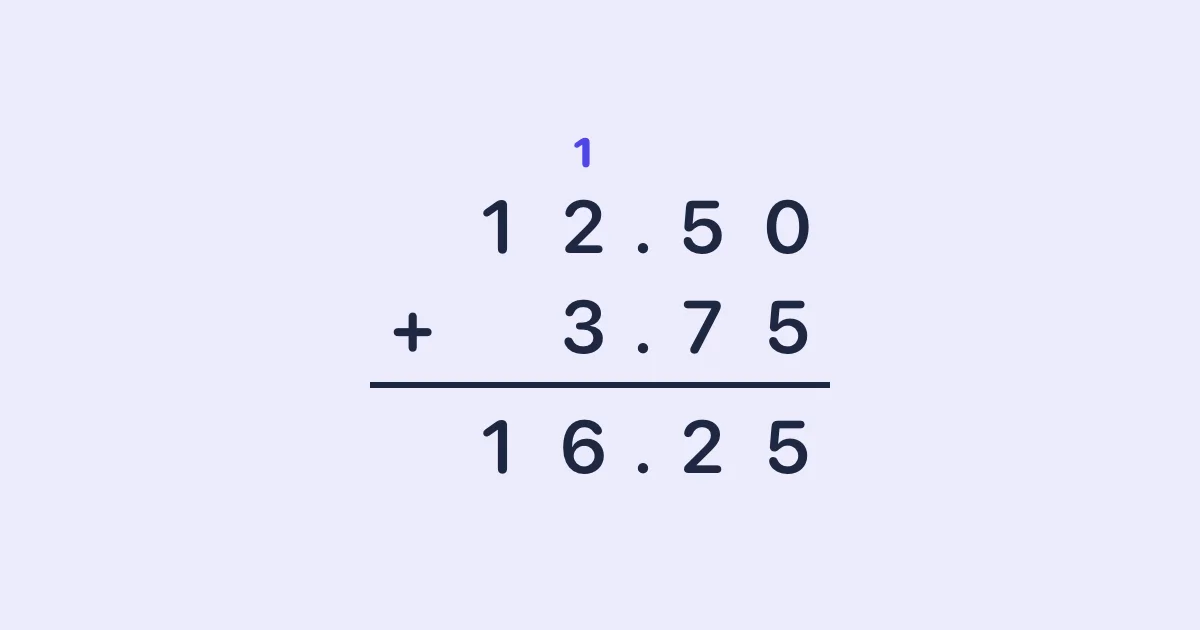 Decimals
Adding and subtracting decimals
How to add and subtract decimals: line up the decimal points, fill gaps with zeros, use the column method and place the point in the…
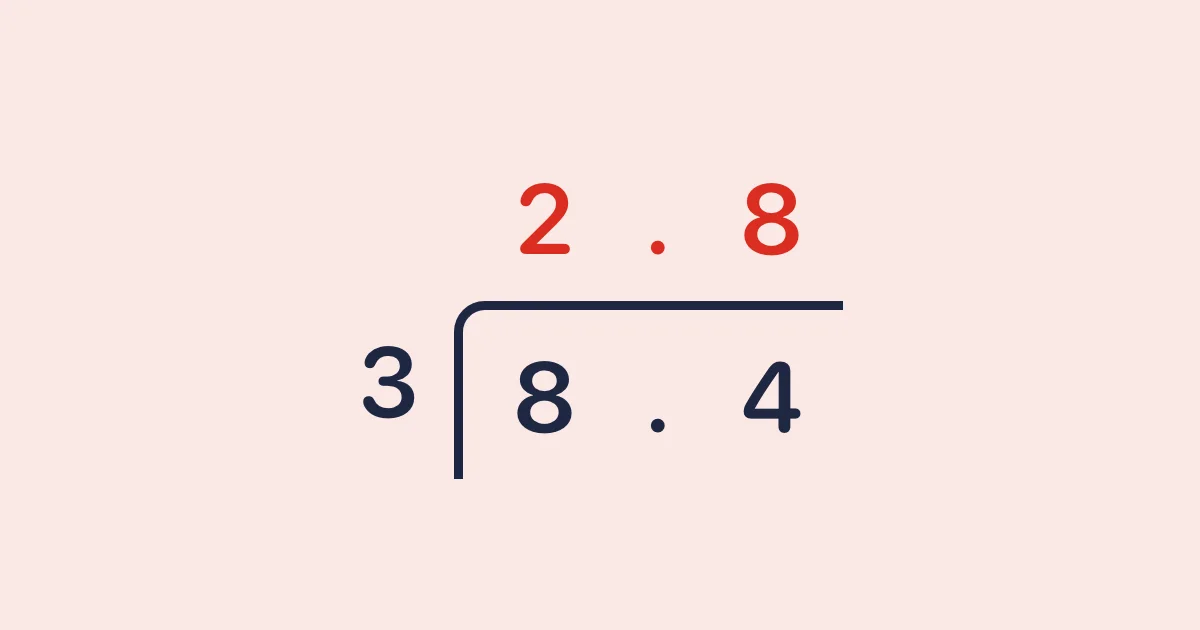 Decimals
Dividing decimals by whole numbers
How to divide a decimal by a whole number with the bus stop method: the decimal point goes above the point, then carry on with zeros.…
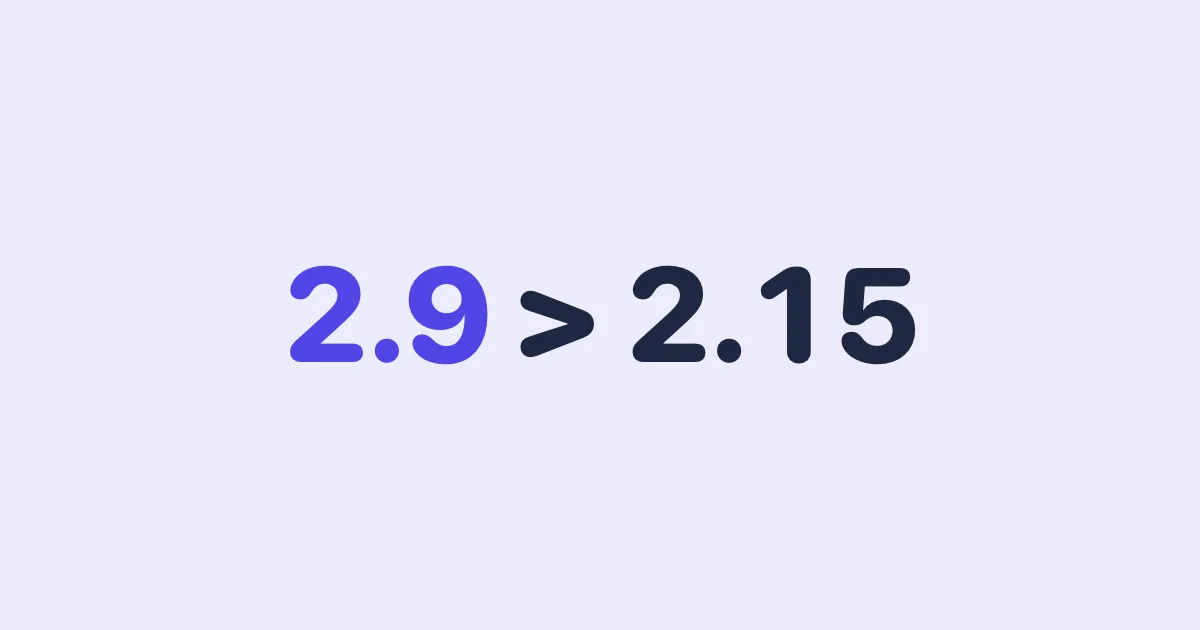 Decimals
How to compare decimals
How to compare two decimals: whole number part first, then tenths, hundredths… The 2.15 vs 2.9 trap, the 'add a zero' trick, diagrams…