Ascending or descending?
- Ascending: smallest to largest: like going up a staircase. We use the < sign: 14 < 12 < 34.
- Descending: largest to smallest: like coming down. We use the > sign: 34 > 12 > 14.
The 3-step method, with an example
Let's put these in ascending order: 34, 12, 58 and 78.
Step 1: find a common denominator
The denominators are 4, 2 and 8. The number 8 is in the 2, 4 and 8 times tables, so it works as a common denominator.
Step 2: convert each fraction
Multiply the top and bottom by the same number to get eighths:
| Original fraction | Calculation | In eighths |
|---|---|---|
| 34 | top and bottom × 2 | 68 |
| 12 | top and bottom × 4 | 48 |
| 58 | already in eighths | 58 |
| 78 | already in eighths | 78 |
Step 3: order the numerators, then write the originals
Order 6, 4, 5, 7 → 4 < 5 < 6 < 7. Replace each eighth with its original fraction:
12 < 58 < 34 < 78
Shortcuts that save time
A common denominator always works, but you can often go faster:
- Same denominator: just order the numerators. 29 < 59 < 89.
- Same numerator: the order of the denominators is reversed! 110 < 16 < 13 < 12 (the more pieces, the smaller each one).
- Compare with 1: fractions less than 1 (numerator smaller than denominator) come before fractions greater than 1.
- Compare with 12: if the numerator is less than half the denominator, the fraction is less than 12.
An example with fractions greater than 1
Put these in ascending order: 53, 23, 43 and 76.
- Common denominator: 6. We get 106, 46, 86 and 76.
- Order the numerators: 4 < 7 < 8 < 10.
- Answer: 23 < 76 < 43 < 53.
How to explain it to your child
- Start with a number line drawn on paper: placing the fractions on it is already putting them in order.
- Get them to write the "eighths" (or "twelfths") list next to the original list, like the table above. It stops them mixing the two up.
- Make them read the answer back with the original fractions: the classic slip is giving the answer with the converted fractions.
- Check the direction of the sign: we read "12 is less than 58".
The most common mistakes
- Ordering by the denominators: putting 18 after 14 because 8 > 4.
- Forgetting to multiply the numerator when changing the denominator.
- Answering with the converted fractions (48 instead of 12).
- Mixing up ascending and descending, or the < and > signs.
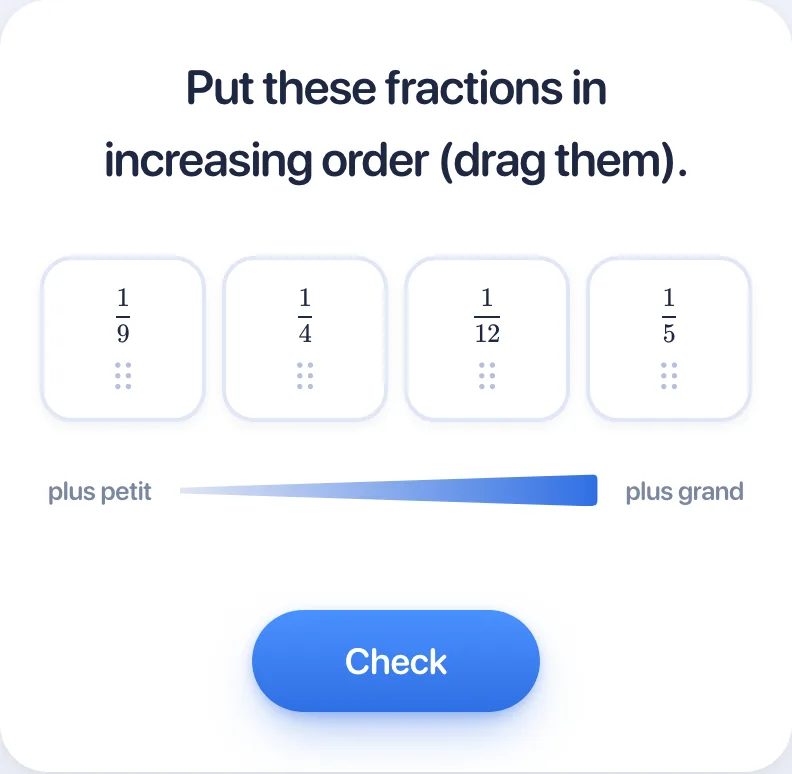
Worked examples
Ascending order: 5/6, 1/6, 3/6
Ascending order: 1/4, 1/2, 1/8
Ascending order: 2/3, 1/2, 5/6
Descending order: 3/5, 7/10, 1/2
Frequently asked questions
What is the difference between ascending and descending order?
Ascending order goes from smallest to largest, using the "<" sign. Descending order goes from largest to smallest, using the ">" sign.
How do you order fractions with different denominators?
First give them all the same denominator, multiplying the top and bottom of each fraction by the same number. Then order the numerators and write the original fractions in that order.
How do you find a common denominator?
Look for a number that is in the times table of every denominator. Usually it's the largest denominator, or the denominators multiplied together. For 2, 4 and 8, use 8; for 3 and 4, use 12.
Keep reading: how to compare fractions and how to put fractions on a number line.
Find out where your child stands in 20 minutes
The EasyMaths assessment is free: around thirty varied questions covering the whole year’s curriculum, with clear results skill by skill and the exercises to work on next.
Take the free assessment →In the curriculum: Grade 4 (Year 4) · Grade 5 (Year 5) · Grade 6 (Year 6)
Keep reading
 Fractions
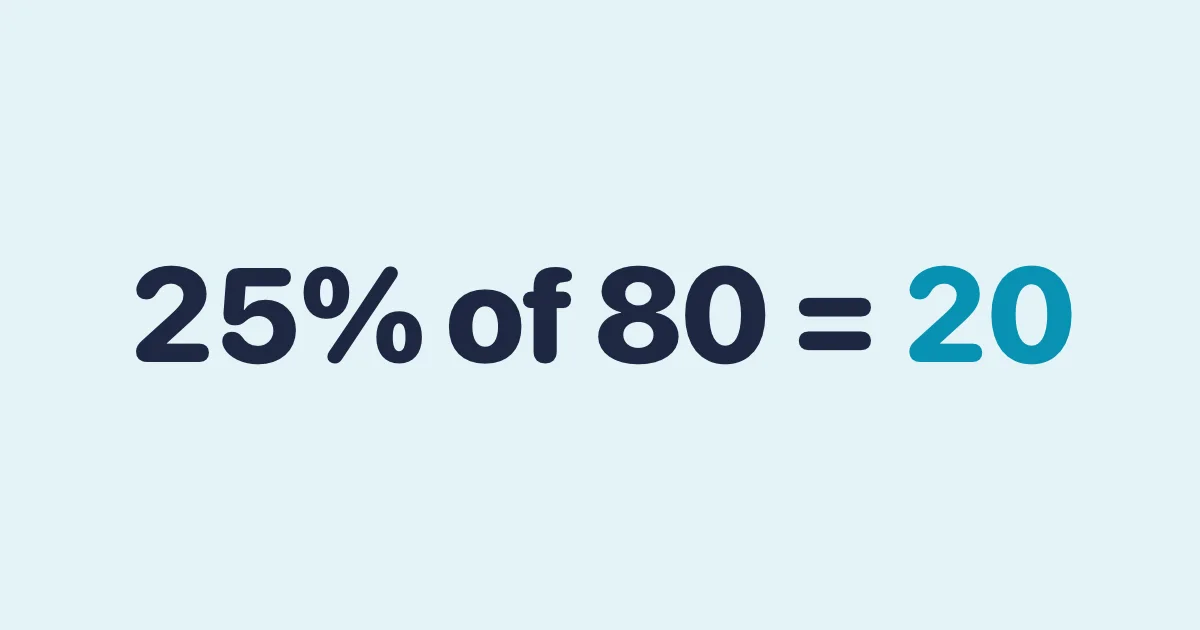
How to work out percentages
How to work out percentages in your head: what 'per cent' means, finding 50%, 25%, 10% and 1%, building any percentage from them, and…
 Fractions
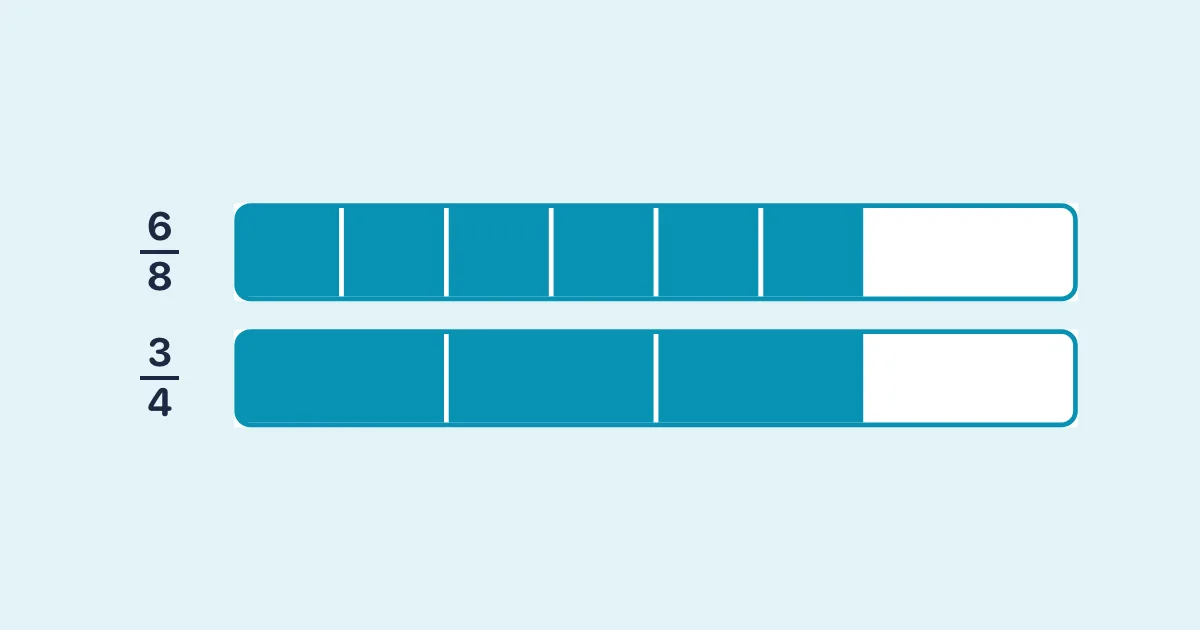
How to simplify fractions
To simplify a fraction, divide the top and bottom by the same number. A clear step-by-step method, divisibility tricks, diagrams and…
 Fractions
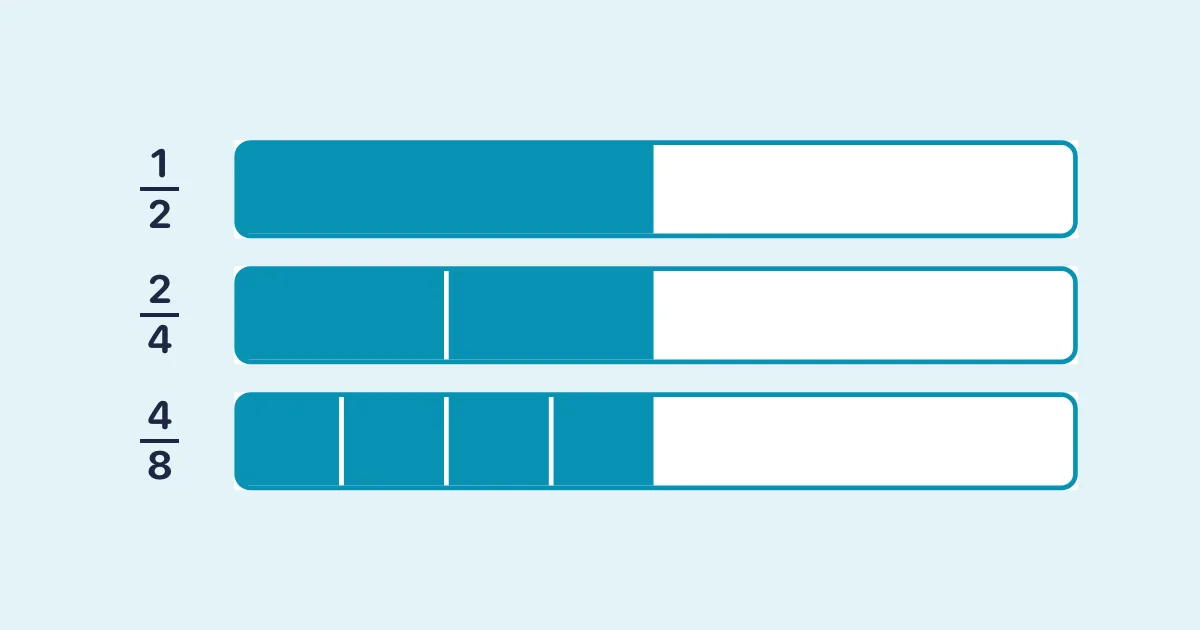
Equivalent fractions: how to find them
What are equivalent fractions and how do you find them? Multiply or divide the top and bottom by the same number. Diagrams, a table and…