Start with unit fractions
A unit fraction has 1 on top: 1/2, 1/3, 1/4… Finding one is simply sharing equally:
- 1/2 of 10 = 10 shared into 2 equal groups = 5;
- 1/3 of 15 = 15 ÷ 3 = 5;
- 1/4 of 20 = 20 ÷ 4 = 5.
So finding 1/4 means dividing by 4. Your child needs to be comfortable with this before going further.
Then non-unit fractions: 3/4 of 12
Picture 12 sweets shared into 4 equal groups:
- Divide by the bottom number: 12 ÷ 4 = 3 (that's 1/4 of 12).
- Multiply by the top number: 3 × 3 = 9 (that's 3/4 of 12).
The bottom number tells you how many equal parts to make; the top number tells you how many of those parts to take.
The bar model
Many schools in England use a bar model: draw a long rectangle for the whole amount, split it into equal boxes (as many as the denominator), and write the value of each box.
For 2/5 of 35: a bar split into 5 boxes, each worth 35 ÷ 5 = 7. Two boxes: 2 × 7 = 14.
The bar model really helps with word problems, because the child can see what they're looking for.
Word problems
- "A class has 28 pupils. 3/4 of them have a pet. How many have a pet?" → 28 ÷ 4 = 7, then 7 × 3 = 21 pupils.
- "Mia has £20 and spends 2/5 of it. How much does she spend?" → 20 ÷ 5 = 4, then 4 × 2 = £8. And how much is left? £20 − £8 = £12 (or 3/5 of £20).
- "How many minutes is 3/4 of an hour?" → 60 ÷ 4 = 15, then 15 × 3 = 45 minutes.
And the other way round?
A harder type of question in Year 5 and Year 6: "1/3 of a number is 8. What is the number?" → if one third is 8, the whole is 3 × 8 = 24. A bar model makes it much easier: 3 boxes of 8.
How to explain it to your child
- Use real objects at first: sweets, counters, coins, sharing into plates.
- Always find the unit fraction first before the non-unit fraction.
- Use the bar model for word problems.
- Make sure times tables and division facts are secure: they do all the work here (see how to learn times tables).
The most common mistakes
- Doing it the wrong way round: multiplying by the bottom and dividing by the top.
- Stopping after the division: 3/4 of 12 = 3 (that's only 1/4!).
- Dividing by the top number: 3/4 of 12 = 12 ÷ 3 = 4 (wrong).
- In "how much is left" problems, forgetting to subtract.
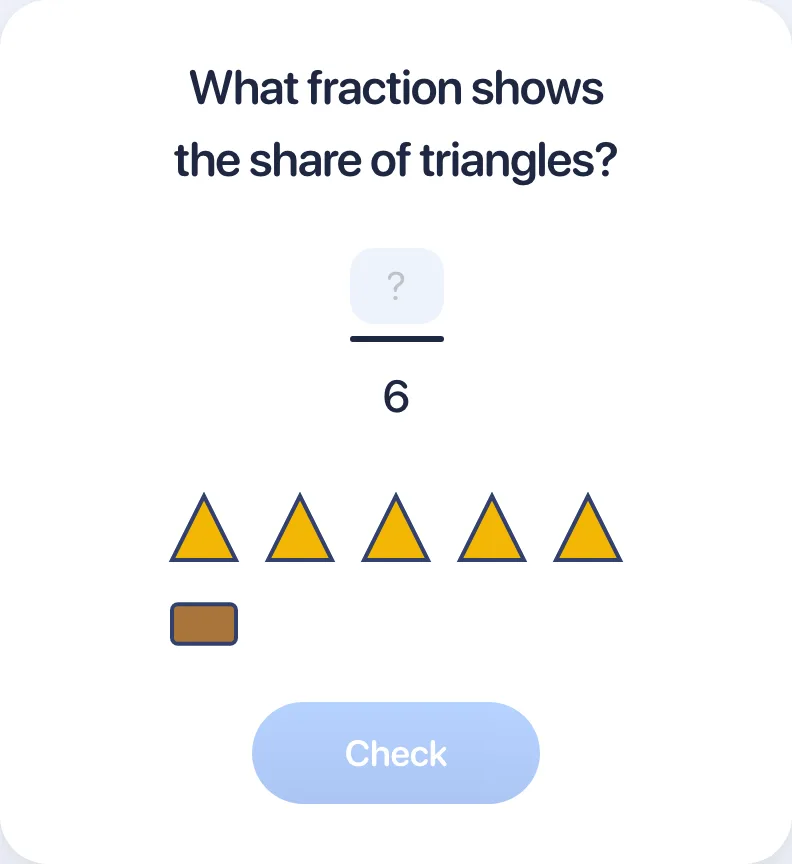
Worked examples
1/5 of 30
2/3 of 18
3/8 of 40
5/6 of 42
1/4 of a number is 9. What is the number?
Frequently asked questions
How do you find a fraction of an amount?
Divide the amount by the denominator (bottom number), then multiply the answer by the numerator (top number). 3/4 of 12: 12 ÷ 4 = 3, and 3 × 3 = 9.
What does "divide by the bottom, times by the top" mean?
It's a way of remembering the method: divide by the bottom number of the fraction to find one part, then multiply by the top number to take the right number of parts.
When do children learn to find fractions of amounts?
In England, children find halves and quarters of quantities in Year 1 and Year 2, unit and non-unit fractions of amounts in Year 3 and Year 4, and use them in problems in Year 5 and Year 6.
Keep reading: how to work out percentages and our lesson Fractions.
Find out where your child stands in 20 minutes
The EasyMaths assessment is free: around thirty varied questions covering the whole year’s curriculum, with clear results skill by skill and the exercises to work on next.
Take the free assessment →In the curriculum: Grade 4 (Year 4) · Grade 5 (Year 5) · Grade 6 (Year 6)
Keep reading
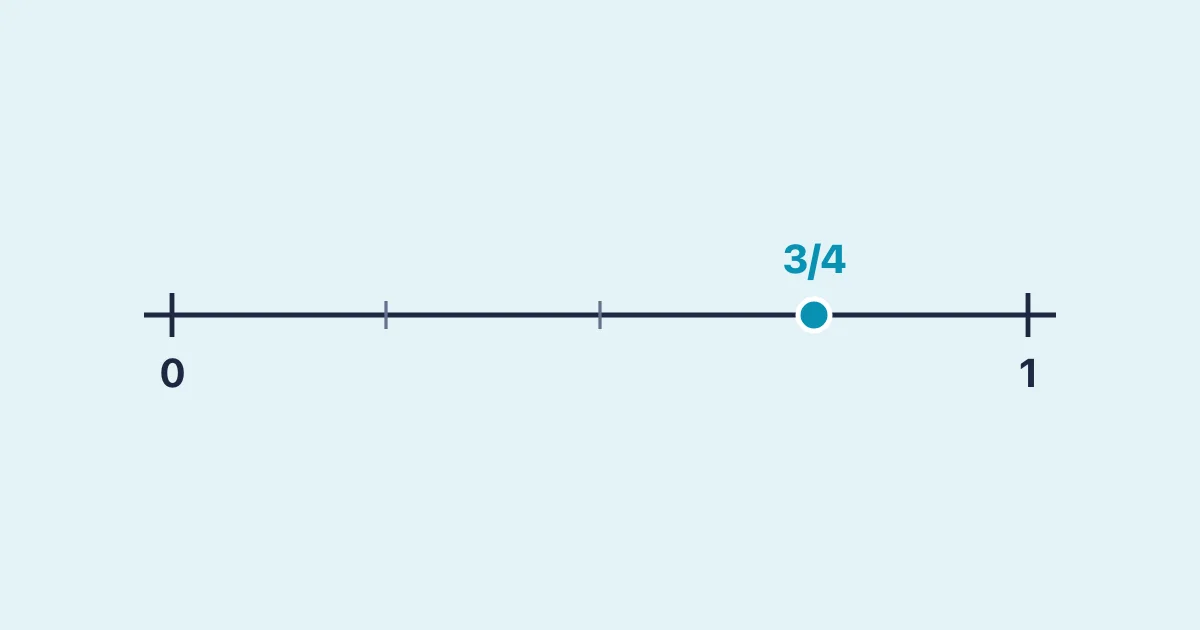 Fractions
How to put fractions on a number line
How to place a fraction on a number line: find the whole, count the equal parts, then count along. Fractions greater than 1, diagrams…
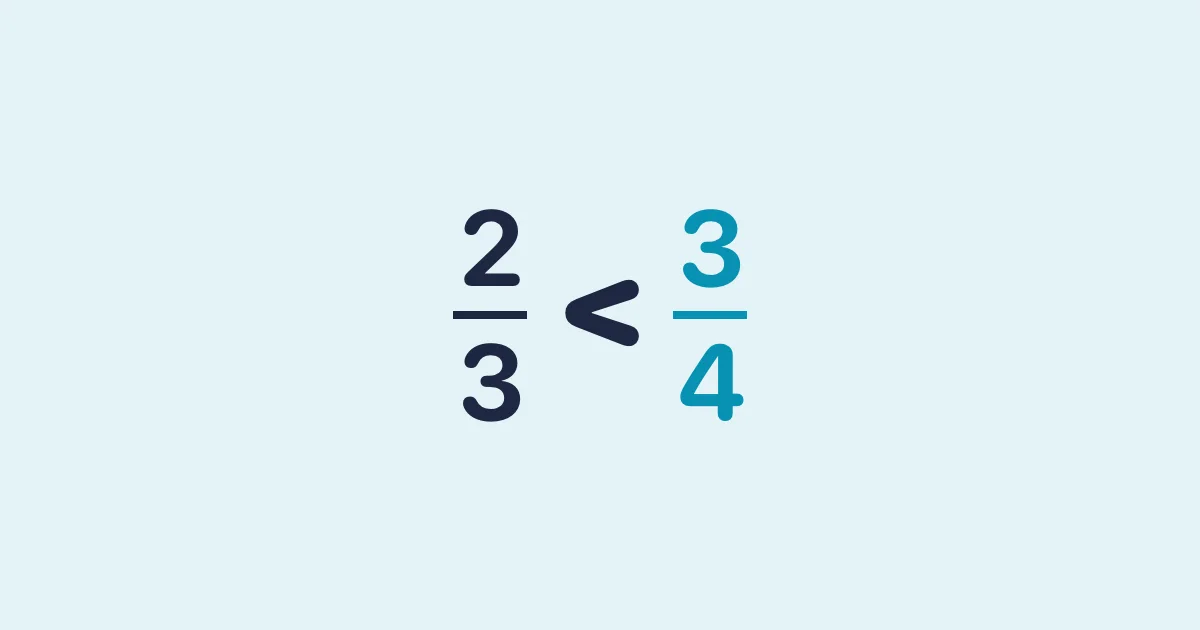 Fractions
How to compare fractions
How to compare two fractions: same denominator, same numerator, different denominators, or compared with 1. Diagrams, a clear method and…
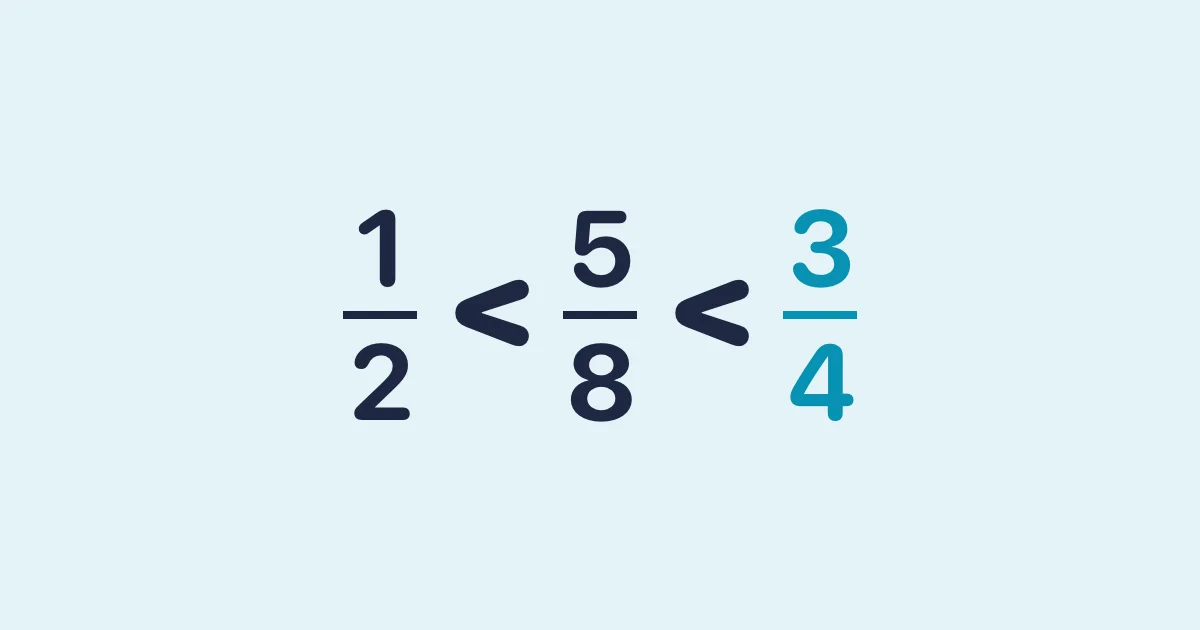 Fractions
How to order fractions from smallest to largest
How to put fractions in order, from smallest to largest (ascending) or largest to smallest (descending): a 3-step method, the number…