What is area?
Area is the amount of surface a shape covers: how much space it takes up, how much paint you'd need to cover it. We measure it by counting how many unit squares fit inside.
- 1 cm² is the area of a square with 1 cm sides (about the size of a fingernail).
- 1 m² is the area of a square with 1 m sides.
Why the formula works
Draw a rectangle 6 cm long and 4 cm wide, split into 1 cm squares:
There are 4 rows of 6 squares. Instead of counting them one by one, we work out 6 × 4 = 24. That's the whole secret of the formula: multiplying length by width is just a quick way of counting the squares.
It's a great way to introduce the formula to your child: it becomes logical, so it's easy to remember.
The square
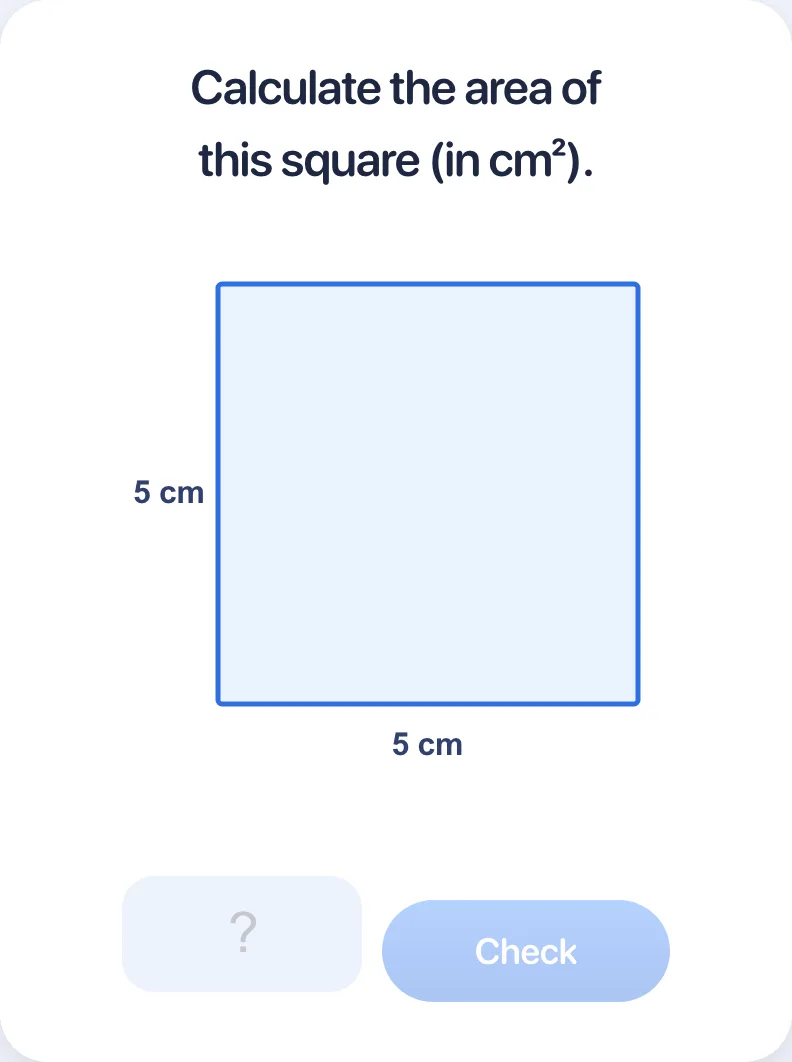
A square is a rectangle whose length and width are equal. So its area is side × side. A square with 5 cm sides has an area of 5 × 5 = 25 cm².
Watch the units
Both lengths must be in the same unit before you multiply.
Example: a rectangle 2 m by 50 cm.
- Convert: 2 m = 200 cm.
- Area = 200 × 50 = 10,000 cm².
- Or in metres: 50 cm = 0.5 m, and 2 × 0.5 = 1 m².
Area or perimeter: don't mix them up
This is the most common confusion: even among parents!
| Perimeter | Area | |
|---|---|---|
| What it is | the distance around the shape (the length of a fence) | the surface inside (the lawn) |
| Rectangle | (L + W) × 2 | L × W |
| For 6 cm × 4 cm | (6 + 4) × 2 = 20 cm | 6 × 4 = 24 cm² |
| Units | cm, m… | cm², m²… |
A more complicated shape? Split it up
For an L-shaped figure (a compound shape), split it into rectangles, find the area of each, and add them. For example, an L-shaped room made of a 5 m × 3 m rectangle and a 2 m × 2 m rectangle has an area of 15 + 4 = 19 m².
How to explain it to your child
- Use squared paper: get them to draw rectangles and count the squares, then discover they can multiply.
- Use real life: the area of their bedroom to buy a rug, the size of a vegetable patch. "My bedroom is 4 m by 3 m: how many m²?"
- Always get them to say the unit: "24 square centimetres".
- Compare area and perimeter on the same rectangle so they feel the difference.
The most common mistakes
- Adding instead of multiplying (6 + 4 = 10).
- Confusing it with perimeter ((6 + 4) × 2 = 20).
- Multiplying lengths in different units (2 m × 50 cm = 100).
- Forgetting the "²" in the unit, or writing cm.
Worked examples
Area of a rectangle 8 cm by 3 cm
Area of a square with 7 m sides
Area of a rectangle 1 m by 30 cm, in cm²
A rectangle has an area of 36 cm² and a length of 9 cm. What is its width?
Perimeter and area of a square with 5 cm sides
Frequently asked questions
What is the formula for the area of a rectangle?
Area = length × width. For example, a rectangle 6 cm by 4 cm has an area of 24 cm².
What's the difference between area and perimeter?
Perimeter is the distance around the edge of a shape (measured in cm, m…). Area is the surface inside (measured in cm², m²…). For a rectangle: perimeter = (L + W) × 2, area = L × W.
Why is area measured in cm²?
Because we're counting squares with 1 cm sides. The little "2" shows that two lengths have been multiplied together.
Keep reading: our lesson Perimeter and area and how to work out perimeter.
Find out where your child stands in 20 minutes
The EasyMaths assessment is free: around thirty varied questions covering the whole year’s curriculum, with clear results skill by skill and the exercises to work on next.
Take the free assessment →In the curriculum: Grade 4 (Year 4) · Grade 5 (Year 5) · Grade 6 (Year 6)
Keep reading
 Geometry
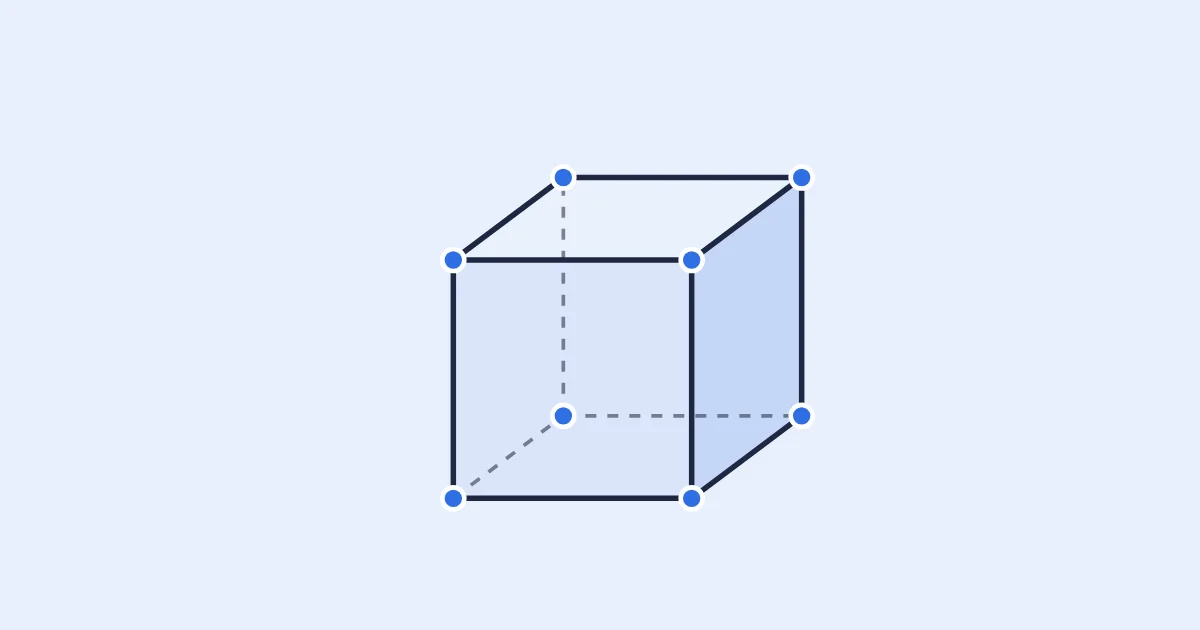
Faces, edges and vertices of 3D shapes
What faces, edges and vertices are, and how many a cube, cuboid, pyramid, prism, cylinder, cone and sphere have. A full table and…
 Geometry
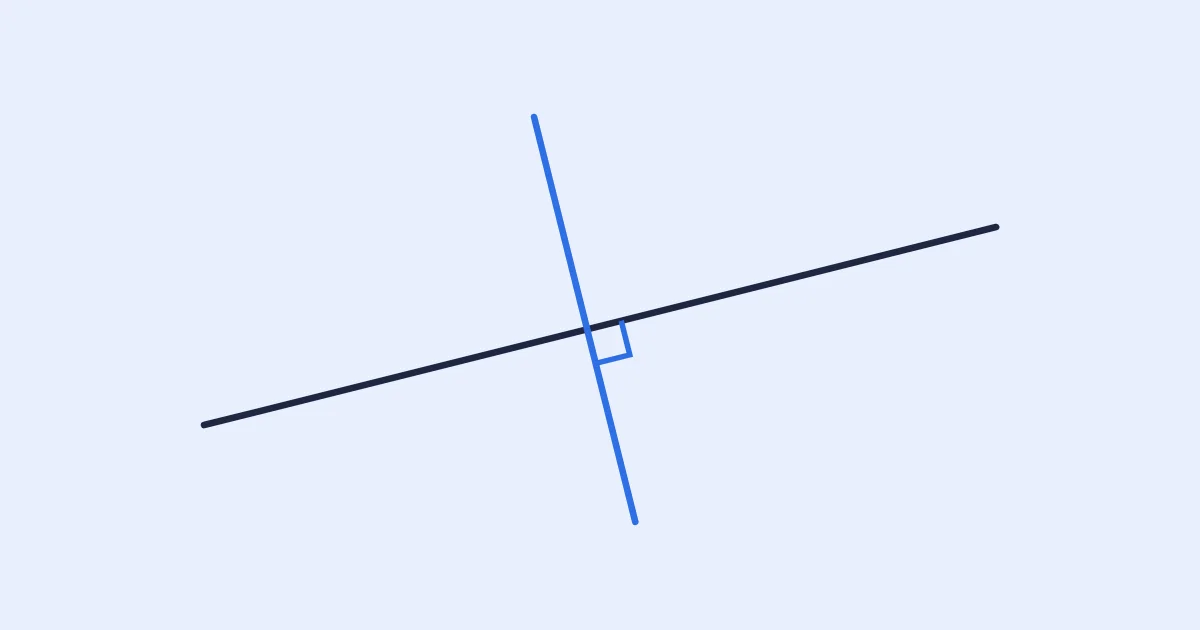
How to draw a perpendicular line
What perpendicular lines are and how to draw one with a set square or a protractor: step by step, through a given point, with tips and…
 Geometry
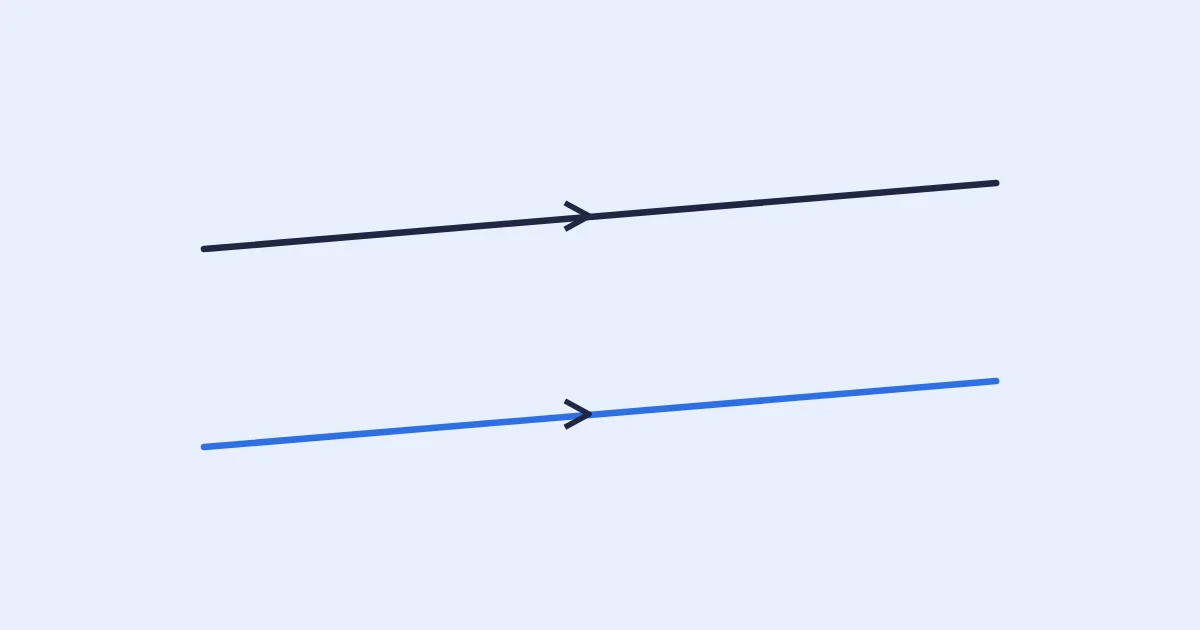
How to draw parallel lines
What parallel lines are and how to draw them accurately with a ruler and set square: the sliding method step by step, how to check,…