What "perpendicular" means
Perpendicular lines are everywhere: the edges of a door and the floor, the lines on squared paper, the sides of a window. The angle they make is a right angle, shown on diagrams with a small square in the corner.
Don't confuse:
- perpendicular: crossing at a right angle;
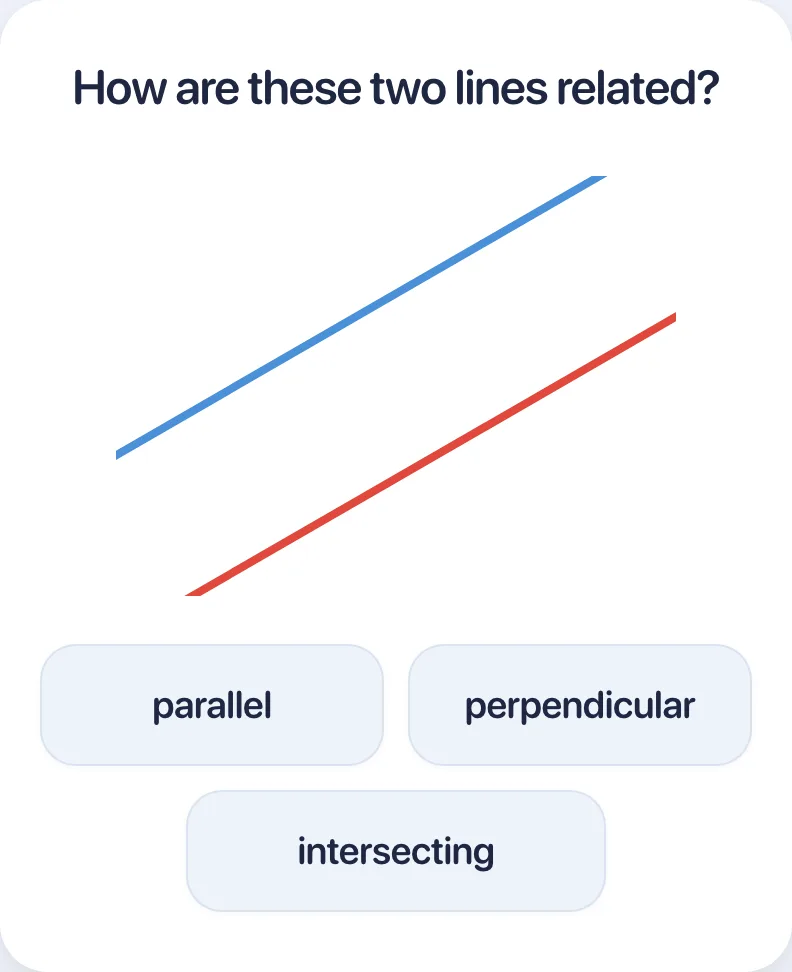
- parallel: never crossing (see how to draw parallel lines);
- intersecting: crossing, but not necessarily at a right angle.
What you need
- a sharp pencil;
- a set square (a triangle with a right angle), or, failing that, a protractor;
- a ruler to extend lines.
Drawing a perpendicular line through a point on the line
- Draw your line and mark the point A on it.
- Place the set square so that one edge of its right angle lies exactly along the line.
- Slide the set square along the line until the corner of the right angle is on point A.
- Draw along the other edge of the right angle.
- Mark the right angle with a small square.
Drawing a perpendicular line through a point not on the line
The point B is above the line.
- Place one edge of the right angle along the line.
- Slide the set square along the line until the other edge of the right angle passes through B.
- Draw along that edge, from B down to the line.
- Mark the right angle.
With a protractor
No set square? Put the centre of the protractor on the point on the line, line up the zero with the line, make a mark at 90°, and join the point to the mark (see how to use a protractor).
How to check a right angle
Place the corner of a sheet of paper (or the set square) in the corner: if both edges fit exactly, it's a right angle.
How to explain it to your child
- Hunt for perpendicular lines around the house: windows, tiles, books.
- Make a home-made right angle: fold a sheet of paper in half, then in half again along the first fold: the corner you get is a perfect right angle.
- Get them to say each step out loud while drawing.
- Insist on precision: sharp pencil, set square held firmly.
The most common mistakes
- Using the long edge of the set square (the hypotenuse) instead of an edge of the right angle.
- Placing the set square by eye without lining the edge up with the line.
- Forgetting to mark the right angle.
- Confusing perpendicular and parallel.
Worked examples
Are the two lines of a + sign perpendicular?
Are the diagonals of a square perpendicular?
How many right angles does a rectangle have?
Frequently asked questions
What are perpendicular lines?
Two lines that cross (or meet) at a right angle, that is 90°. On a diagram, the right angle is shown with a small square.
How do you draw a perpendicular line without a set square?
Use a protractor (mark 90° and join it to the point), or a folded sheet of paper whose corner forms a right angle.
When do children learn about perpendicular lines?
In England, children identify perpendicular and parallel lines in Year 3, and use them to describe and draw shapes in Year 4 to Year 6.
Keep reading: how to draw parallel lines and our lesson Parallel and perpendicular lines.
Find out where your child stands in 20 minutes
The EasyMaths assessment is free: around thirty varied questions covering the whole year’s curriculum, with clear results skill by skill and the exercises to work on next.
Take the free assessment →In the curriculum: Grade 4 (Year 4) · Grade 5 (Year 5) · Grade 6 (Year 6)
Keep reading
 Geometry
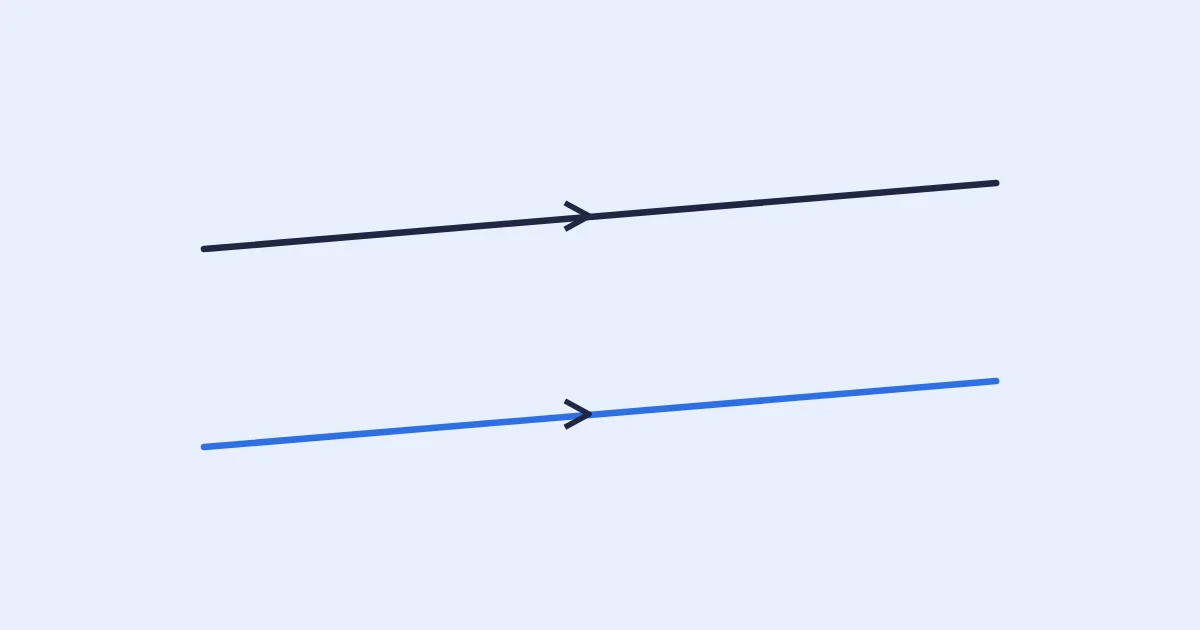
How to draw parallel lines
What parallel lines are and how to draw them accurately with a ruler and set square: the sliding method step by step, how to check,…
 Geometry
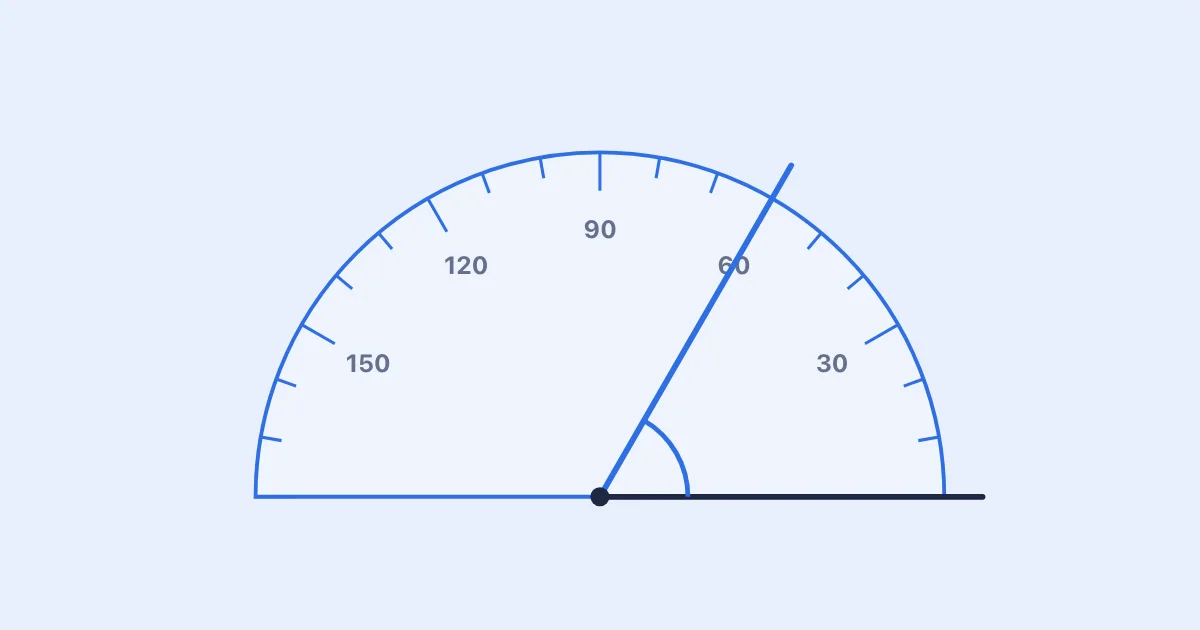
How to use a protractor to measure angles
How to use a protractor: centre on the vertex, zero on one arm, choose the right scale. Types of angles, drawing an angle and the common…
 Geometry
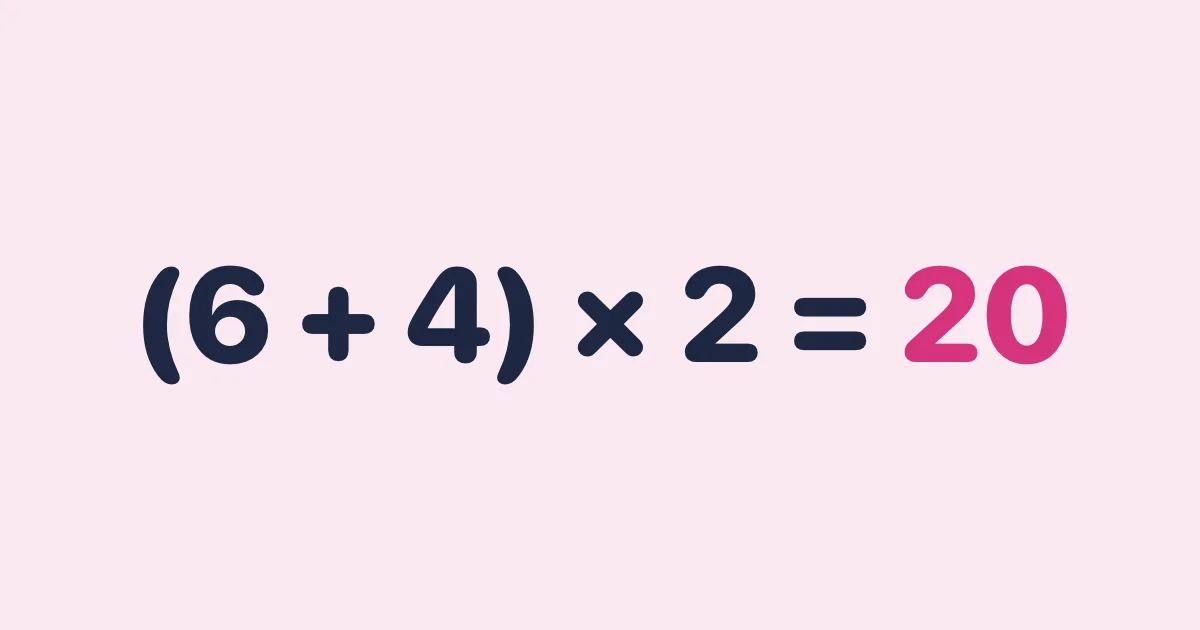
How to work out the perimeter of a rectangle
How to work out perimeter: add up the sides, or (length + width) × 2 for a rectangle. Squares, missing sides, perimeter vs area, worked…