What "even" means
A number is even when you can put objects into pairs with none left over: in other words, when you can split it into two equal groups.
- 8 socks: 4 pairs, none left over → 8 is even.
- 7 socks: 3 pairs and one odd sock → 7 is odd.
That's the best way to explain it to a child: with socks, shoes, or making teams of two. (It's also where the phrase "odd sock" comes from!)
| Even | 0 | 2 | 4 | 6 | 8 | 10 | 12 | 14 |
|---|---|---|---|---|---|---|---|---|
| Odd | 1 | 3 | 5 | 7 | 9 | 11 | 13 | 15 |
Odd and even numbers alternate: every other number. Count in 2s from 0 for the even numbers (0, 2, 4, 6…) and from 1 for the odd ones (1, 3, 5, 7…).
Why only the last digit?
Curious children often ask this, and the answer is neat. Take 374: it's 370 + 4. Every multiple of ten is even (10, 20, 30… can always be split into two equal groups). So 370 is even, whatever happens. All that's left is to look at the ones: 4 is even, so 374 is even.
That's why, even for a huge number like 8,456,937, you only need to look at the 7: the number is odd.
Is zero even?
Yes, 0 is even. It ends in 0, it can be split into two equal groups (0 and 0), and in the number sequence it comes just before 1, which is odd: odd and even numbers alternate. It's a question that comes up often… and catches out plenty of adults!
The addition rules
A little bonus that children love, and that helps check calculations:
| Calculation | Answer | Example |
|---|---|---|
| even + even | even | 4 + 6 = 10 |
| odd + odd | even | 3 + 5 = 8 |
| even + odd | odd | 4 + 5 = 9 |
How to explain it to your child
- Make pairs with real objects: socks, Lego, pasta. "Is there one left on its own?"
- Play "odd or even" with house numbers: on many streets, the even numbers are on one side and the odd numbers on the other!
- Count in 2s out loud, starting from 0, then from 1.
- Let them guess with huge numbers: "Is 1,000,003 odd or even?" They'll love answering in a second.
The most common mistakes
- Looking at the first digit instead of the last: 25 is odd, even though it starts with 2.
- Thinking 0 is odd, or "neither odd nor even".
- Thinking a big number must be even.
Worked examples
Is 58 odd or even?
Is 731 odd or even?
What is the largest two-digit even number?
Is 13 + 27 odd or even?
Frequently asked questions
How can you quickly tell if a number is even?
Look at its last digit: if it ends in 0, 2, 4, 6 or 8, it's even. Otherwise, it's odd.
Is zero an even number?
Yes. Zero can be split into two equal groups and ends in 0: it's an even number.
When do children learn about odd and even numbers?
In England, children start recognising odd and even numbers in Year 1 and Year 2, and use them with multiples and divisibility in Year 5 and Year 6.
Keep reading: our lesson Factors and multiples.
Find out where your child stands in 20 minutes
The EasyMaths assessment is free: around thirty varied questions covering the whole year’s curriculum, with clear results skill by skill and the exercises to work on next.
Take the free assessment →In the curriculum: Grade 2 (Year 2) · Grade 3 (Year 3) · Grade 4 (Year 4)
Keep reading
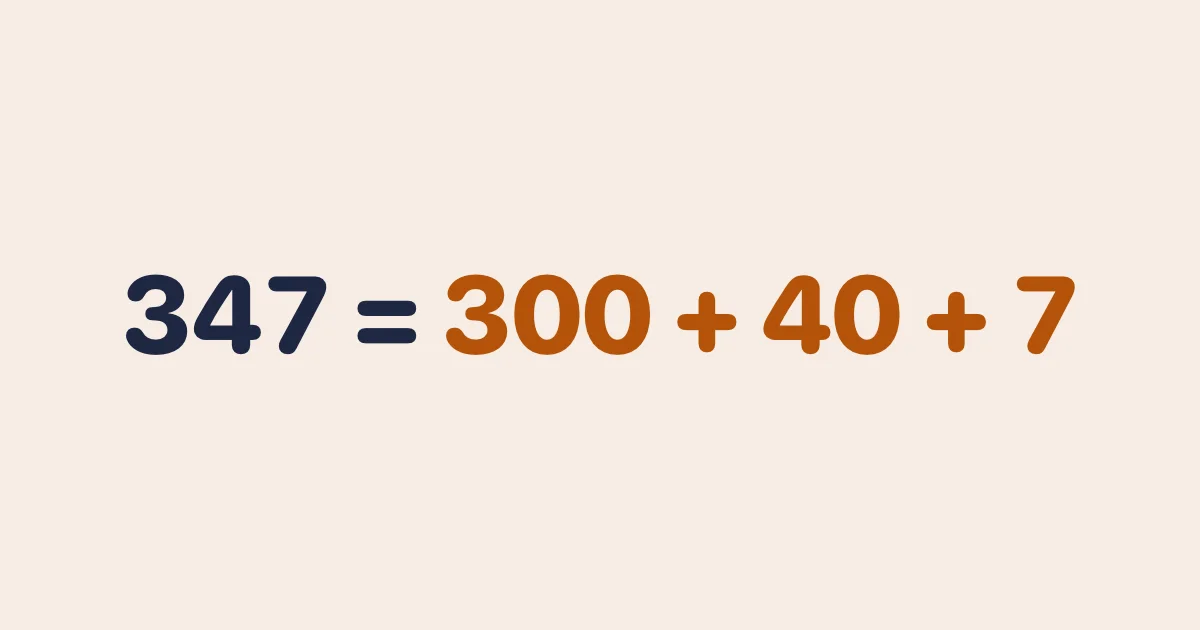 Place value
Partitioning numbers into hundreds, tens and ones
How to partition numbers into hundreds, tens and ones: 347 = 300 + 40 + 7. Different ways to partition, the place value chart, zeros and…
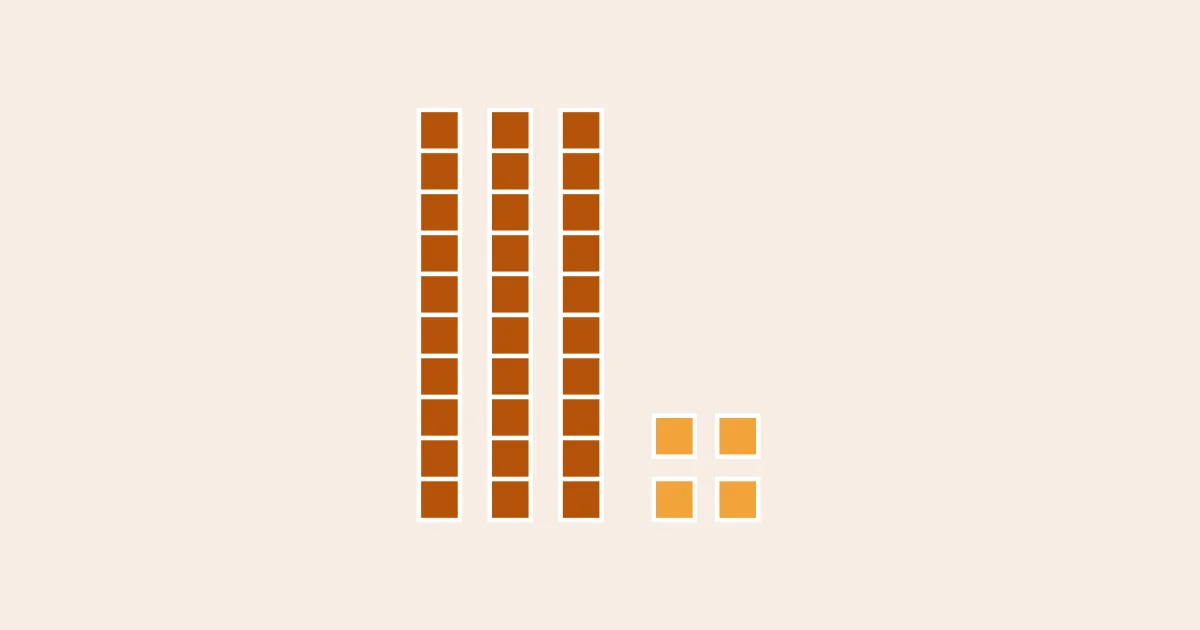 Place value
Tens and ones: how to explain place value
How to explain tens and ones (place value) to a young child: groups of ten, base ten equipment, the place value chart, zero and the…
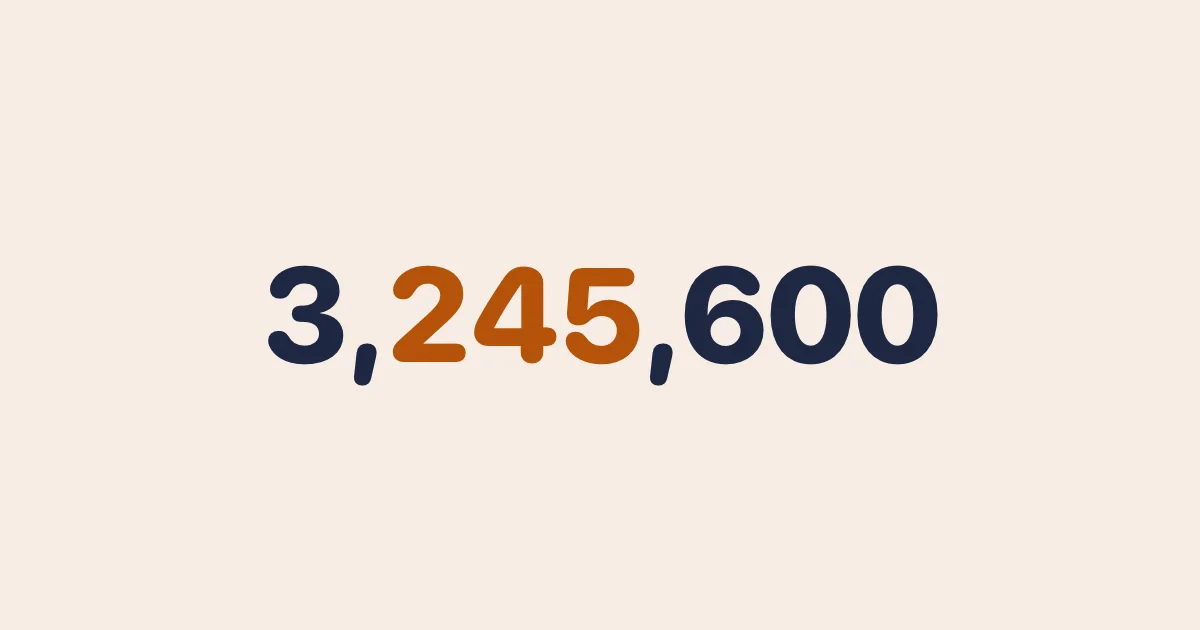 Place value
How to read large numbers
How to read and write large numbers: split them into groups of three with commas, read each group with its name (million, thousand),…