Two simple tests
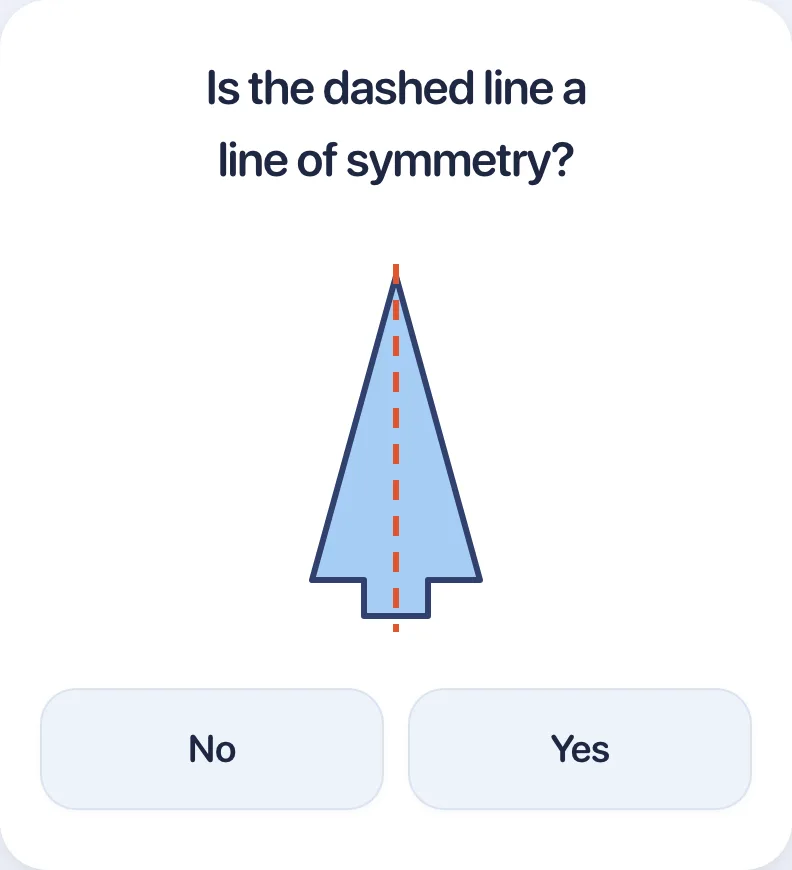
- The folding test: cut out the shape and fold it. If the two halves sit exactly on top of each other, the fold is a line of symmetry.
- The mirror test: stand a small mirror upright on the line. If what you see in the mirror plus the half in front of it makes the whole shape, it's a line of symmetry.
How many lines of symmetry?
| Shape | Lines of symmetry |
|---|---|
| square | 4 (2 through the middles of the sides, 2 diagonals) |
| rectangle | 2 (through the middles of the sides: not the diagonals!) |
| equilateral triangle | 3 |
| isosceles triangle | 1 |
| scalene triangle | 0 |
| regular hexagon | 6 |
| circle | infinitely many (any line through the centre) |
Completing a symmetrical drawing
A common exercise: half a shape is drawn on squared paper, next to a line of symmetry. Your child must draw the other half.
- Take one point of the shape.
- Count the squares between that point and the line.
- Count the same number of squares on the other side, at right angles to the line, and mark the point.
- Do the same for every corner, then join the points.
Each point and its reflection are the same distance from the line, on either side.
Symmetry in letters and in the real world
- Letters: A, M, T, U, V, W, Y have a vertical line of symmetry; B, C, D, E, K have a horizontal one; H, I, O, X have both.
- Nature: butterflies, leaves, faces (almost!).
- Buildings and logos: many are designed to be symmetrical.
How to explain it to your child
- Fold and cut: fold a sheet in half, cut out a shape along the fold and unfold: a perfectly symmetrical shape appears.
- Paint butterflies: put blobs of paint on one half of a sheet, fold, unfold.
- Use a small mirror on drawings and letters.
- Test the rectangle's diagonals together to beat the trap.
The most common mistakes
- Thinking the diagonals of a rectangle are lines of symmetry.
- Thinking only vertical lines can be lines of symmetry (they can be horizontal or diagonal).
- Counting squares badly when completing a drawing.
- Drawing the other half as a copy (shifted) rather than a reflection (flipped).
Worked examples
How many lines of symmetry does a square have?
How many lines of symmetry does the letter H have?
A point is 3 squares to the left of a vertical line of symmetry. Where is its reflection?
Does a parallelogram (not a rectangle) have a line of symmetry?
Frequently asked questions
What is a line of symmetry?
A line that splits a shape into two halves that are mirror images of each other: folding the shape along the line makes the halves match exactly.
How many lines of symmetry does a rectangle have?
Two: the lines through the middles of opposite sides. Its diagonals are not lines of symmetry.
When do children learn about symmetry?
In England, children identify lines of symmetry in 2D shapes in Year 2 and Year 4, and complete symmetrical figures in Year 4. Reflection on a grid comes in Year 5 and Year 6.
Keep reading: our lesson Symmetry.
Find out where your child stands in 20 minutes
The EasyMaths assessment is free: around thirty varied questions covering the whole year’s curriculum, with clear results skill by skill and the exercises to work on next.
Take the free assessment →In the curriculum: Grade 2 (Year 2) · Grade 3 (Year 3) · Grade 4 (Year 4) · Grade 5 (Year 5)
Keep reading
 Geometry
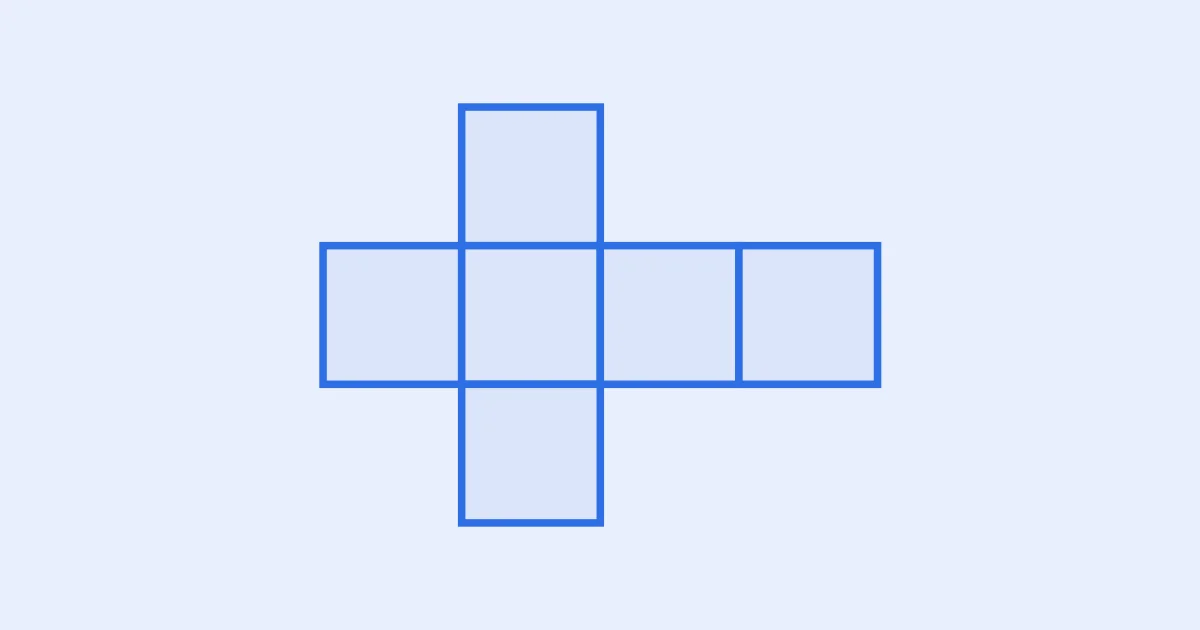
Nets of a cube: the 11 nets and how to spot them
What a net of a cube is, the 11 different nets, how to tell whether a shape of 6 squares folds into a cube, and which ones don't work.
 Geometry
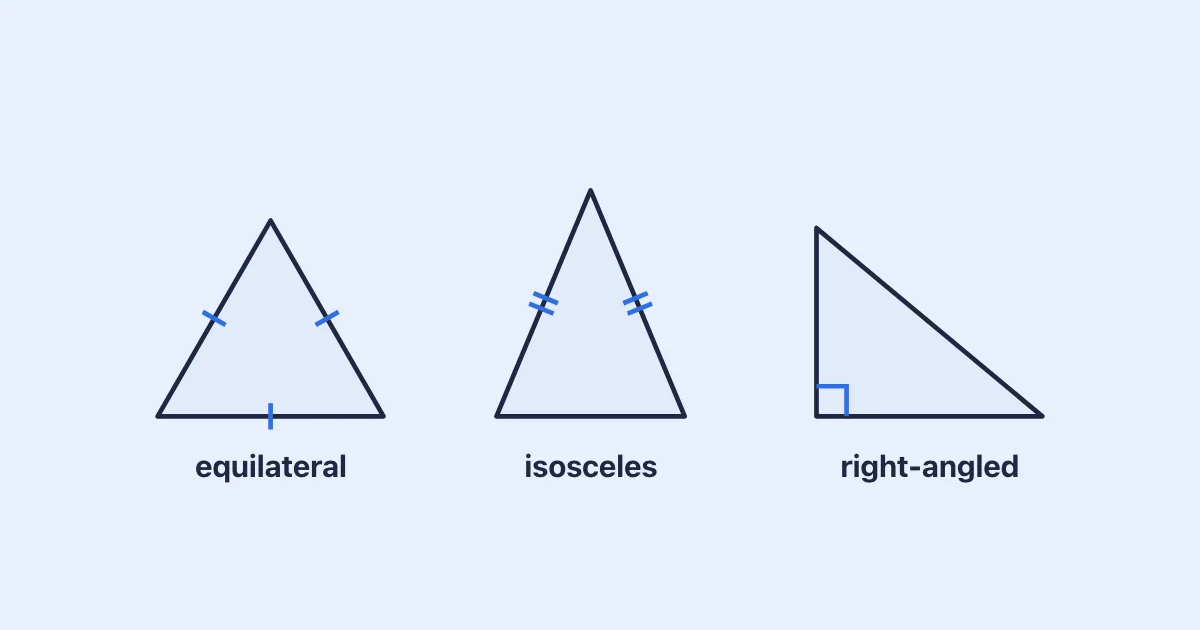
Types of triangles: equilateral, isosceles, scalene
Types of triangles explained for children: equilateral, isosceles, scalene and right-angled. Recognising them by sides and angles, the…
 Geometry
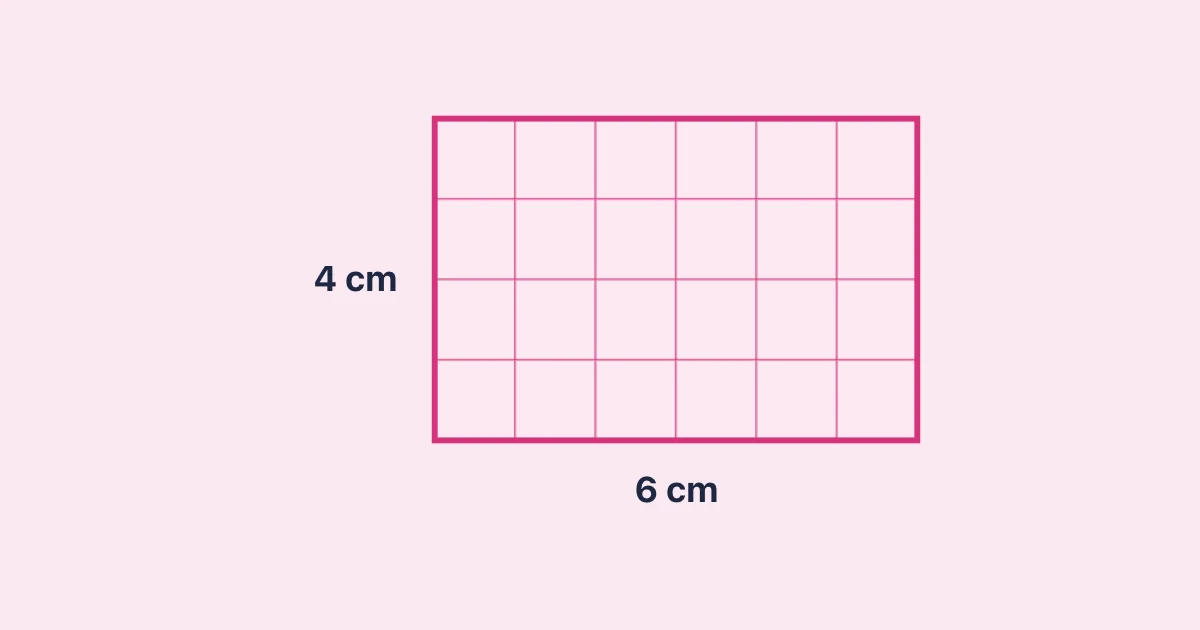
How to find the area of a rectangle
How to find the area of a rectangle: length × width, in cm² or m². Why the formula works, area vs perimeter, diagrams and worked examples.